
International Program
Staff report on Asian Young Women’s Leadership Development Seminar 2026 in the Philippines

Theme: Rooted in God
Theme Bible Verse: So then, just as you received Christ Jesus as Lord, continue to live your lives in him, rooted and built up in him, strengthened in the faith as you were taught, and overflowing with thankfulness. (Colossians 2:6-7)
Schedule: February 4– 11, 2026
(The six-day training in the Philippines took place from February 5 to 10)
The Asian Young Women’s Leadership Development Seminar (AYWLD) was held in Quezon City, Philippines.
The theme of the 2026 seminar was “Rooted in God.” A total of 30 participants from nine Asian countries, including Cambodia, Indonesia, South Korea, Laos, Malaysia, the Philippines, Singapore, Vietnam and Japan (ranging from university students to those in their late 30s) attended the seminar. Additionally, 4 Filipino volunteers, who had previously joined the AYWLD, were also involved. From Japan, 5 participants attended the seminar. Upon completion of the training, participants will return to their respective countries as leaders, expected to actively engage rather than remain passive throughout the seminar.
Opening Worship & Gala Dinner
The first day began with an opening worship service on the theme “Rooted.” Participants then learned about the history of the Philippines Regional Conference of The United Methodist Church, followed by a special lecture by Dss. Norma Dollaga and a special program by A-Women (details below).
In the evening, a Gala Dinner was held. Participants attended in traditional dresses from their respective countries and enjoyed experiencing the rich and diverse cultures of Asia in a festive atmosphere. Guests also attended the dinner and offered words of congratulations on the seminar being held in the Philippines.


Sharing Social Issues Faced by Young Women
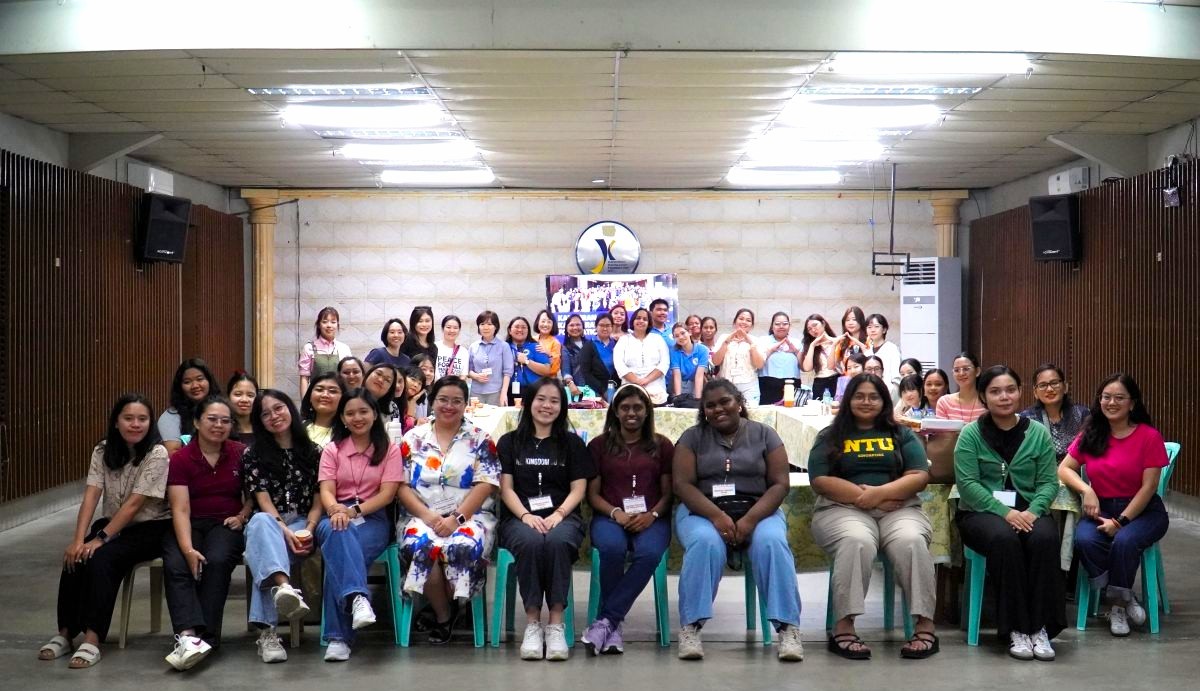
On the second day, a Country Sharing session was held, during which participants from each country gave presentations on the social issues faced by young women in their communities.
Japanese participants spoke about lookism and the challenge of balancing childcare and career. Participants from other countries addressed topics, such as women’s mental health, lack of access to education, and teenage pregnancy.
During the Q&A session, participants engaged in active discussions and exchanged views on the situations in their respective countries.


Learning About Social Issues in the Philippines
As part of the AYWLD program, participants visit nonprofit organizations addressing social issues and learn about their work. On the third day, we visited the Manila North Cemetery and witnessed the realities faced by the people living there. We then visited Kapatiran-Kaunlaran Foundation, Inc. (KKFI), which provides community support in the cemetery, and learned about its work. We also heard about the mission activities of the Philippines Regional Conference of The United Methodist Church and its women’s program agency, the Board of Women’s Work.
The Manila North Cemetery, located in the heart of Manila, is one of the oldest and largest cemeteries in the city. Since families began living there in the 1950s, generations have remained, and it is now estimated that around 6,000 people reside there. Life in the cemetery involves many challenges, including poor sanitation. Behind this situation, structural problems exist in Philippine society, such as entrenched economic inequality, rapid population growth, and a shortage of affordable housing for low-income families. It is said that more than 30 percent of Manila’s population still lives in informal settlements along rivers, under bridges, beside roads, and even in cemeteries.
Participants walked through the cemetery and listened directly to residents. One message was repeated: “We do not live here because we want to. We have no other choice.” The residents have difficulty finding stable and sufficient job and have no choice but to remain in the cemetery. Their children face discrimination and bullying in school, which prevent them from continuing their education, creating a vicious cycle that limits their future opportunities.
Amid these harsh realities, KKFI continues to serve the community with care and commitment. Formerly known as the Methodist Social Center, KKFI works under the belief that love of God is inseparable from love of neighbor, justice, and social renewal. The organization engages in faith-based social transformation in areas such as education, healthcare, and agriculture, and the Manila North Cemetery is one of its mission fields. There, KKFI provides educational programs and health awareness activities. We learned about the wide-ranging work of KKFI and its significance.
Learning About Ministry by Philippines Regional Conference of The United Methodist Church
Next, we received presentations on the Ministry with the Community of Persons with Disabilities by the Philippines Regional Conference of The United Methodist Church and the Ministry with the Community of Women Living with AIDS/HIV by the Board of Women’s Work. We also had the opportunity to hear directly from persons with disabilities and women living with HIV.
The Ministry with the Community of Persons with Disabilities began in 2021 to accompany persons with disabilities who were isolated during the COVID-19 pandemic, and it continues today. We learned how the church has walked alongside them through awareness-raising initiatives and dialogue.
A person with a disability shared her testimony, explaining how encountering the ministry led her to become involved in church activities herself and to take action toward building a society in which persons with disabilities are not left behind.
The session on the Ministry with the Community of Women Living with AIDS/HIV began by listening to the stories of women living with HIV. Several shared their experiences openly, speaking of infection from partners, their children’s infection, divorce, with emotional pain and struggles. HIV is not merely a disease; it carries deep emotional wounds and exposes individuals to discrimination and prejudice in society. Listening to these stories made us reflect on how our own lack of understanding or silence can also contribute to the isolation of those living with HIV.
In such a context, the Board of Women’s Work carries out a ministry of solidarity with them through awareness-raising, education, and support. The session made us reflect on the importance and challenges of addressing HIV issues—topics that are still rarely discussed within the church.
We heard powerful testimonies on the third day. The faith and mutual support shown by people facing difficult circumstances left a deep impression on us. At the same time, it challenged us to reflect on whether our own churches are truly open to those facing social difficulties.
Learning about Philippine history
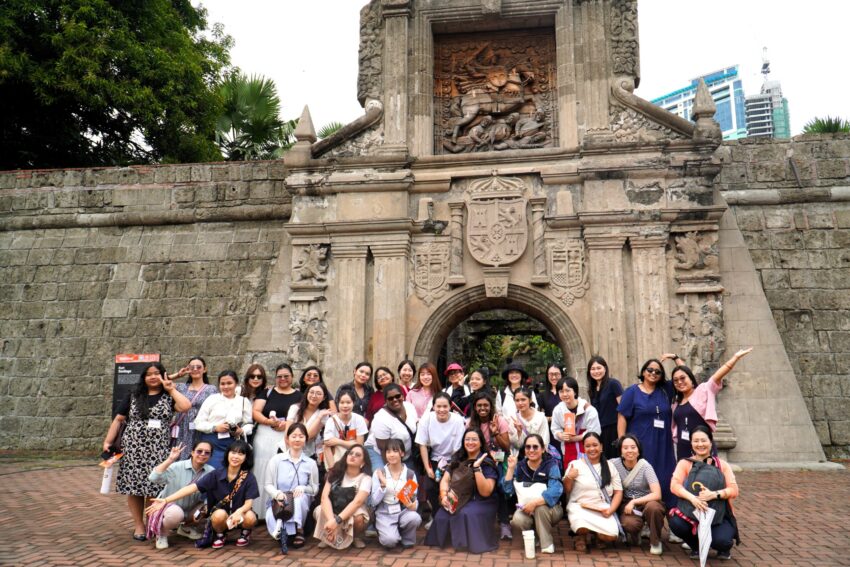
On the fourth day, Sunday, we attended a worship service at UCCP Cosmopolitan Church. After the service, we visited Intramuros, a historic walled city built during the Spanish colonial period.
The Philippines has experienced a complex and painful history, including more than 300 years of Spanish colonial rule, followed by American governance, and three years of Japanese occupation during World War II. Visiting San Agustin Church, Casa Manila, Memorare Manila 1945, Manila Cathedral, and Fort Santiago in Intramuros, we gained a deeper understanding of this history.
During the Pacific War, the Philippines became a major battlefield, and many lives were lost in the fighting between Japan and the United States. Although Japan and the Philippines have undergone postwar reconciliation and historical issues are not often discussed in public today, sites such as Memorare Manila 1945 and Fort Santiago continue to preserve the memory of the suffering endured by the Filipino people, including the massacre carried out by the Japanese military.
Lectures and Sessions during the Seminar

During the seminar, various lectures were given, including “Standing Firm in a Shaking World” by Rev. Dr. Yani of the Scranton Women’s Leadership Center, a partner organization of Wesley Zaidan, and “Paradigm Shift of Leadership” by Rev. Hikari, Representative Director of Wesley Zaidan.
Each lecture provided both practical and spiritually enriching insights, encouraging participants to reflect on themselves and to become leaders who serve their communities while being deeply rooted in God.
On the first day, a special lecture “Seek Peace and Pursue It!” was given by Dss. Norma Dollaga. Her current episcopal assignment is at the Ecumenical Center for Development that is ecumenically engaged in justice, peace, human rights, humanitarian work, and women’s empowerment. She is also a recipient of the World Methodist Peace Award.
She spoke passionately about the importance of personally visiting the poor and the suffering, emphasizing that “justice, peace, and human rights become reality only when we engage in them personally.” Her words, grounded in her experience working on social justice, deeply resonated with the participants.
A special program by A-Women was also held. A-Women is a program for young women under the Board of Women’s Work. It began during the COVID-19 pandemic in 2020 as an online community where young Christian women could safely share, learn, and support one another. Since then, it has continued to provide opportunities for growth through leadership training and empowerment programs.


Fun Time
On the evening before the final day, a special event called the Sharing Show was held. Participants used the gifts given to them by God to present songs, dances, and comedy performances. The room was filled with smiles and applause, and its fun time further deepened the bonds among the participants.
Morning Devotion and Night Prayers
 During the seminar, each day began with morning devotion and ended with night prayer. Participants from different countries took turns leading these prayer sessions, creating opportunities to encounter God in various ways. On the first day, participants from the Philippines led the opening worship, and at the closing worship, a volunteer team of participants led the service.
Closing Worship
At the closing worship on the sixth day, Rev. Hikari asked in her message, “Raise your hand if you consider yourself a leader” When She had asked the same question at the opening worship, almost no one raised their hand. This time, however, everyone did.
Through the seminar, the participants came to realize that God has planted a “seed” within each of them. Just as a seed takes root, grows, and eventually blossoms, our gifs grow when we are rooted in God’s love and bear fruit through love in action. This is the kind of leadership we seek to cultivate.
Alumni Involvement
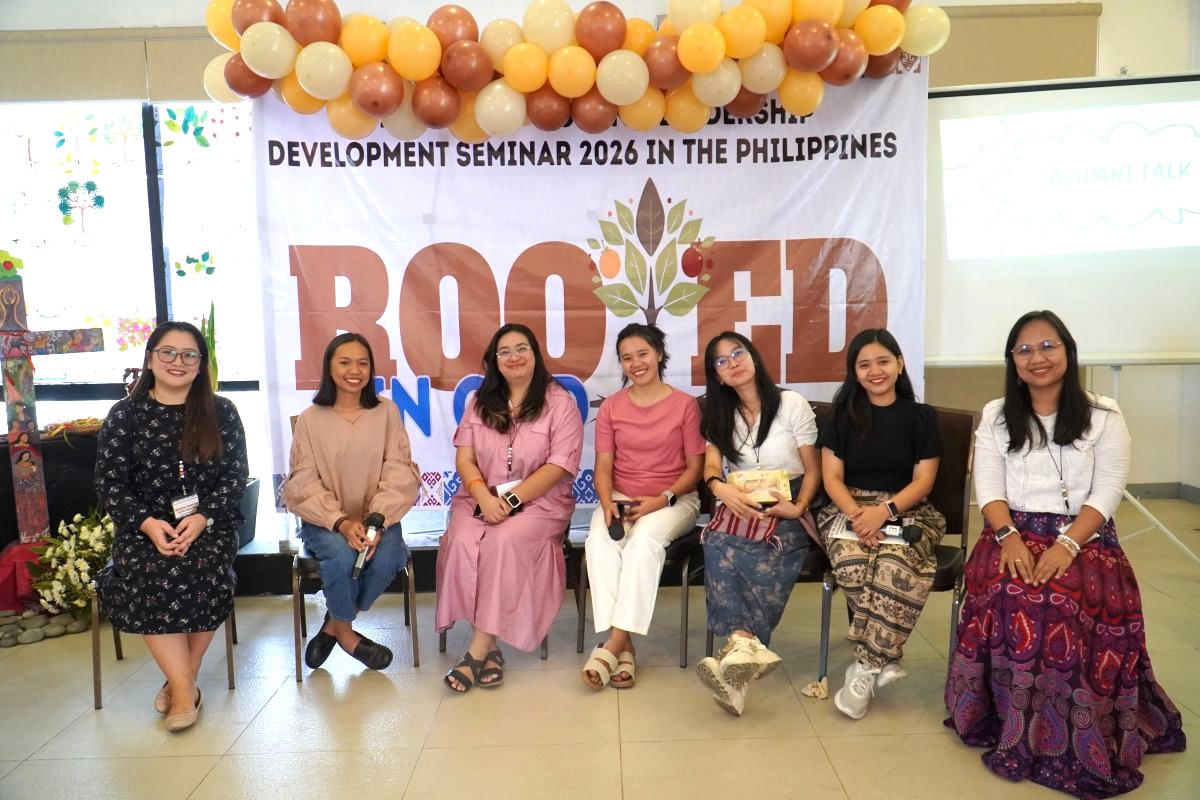 AYWLD alumni supported the seminar as a volunteer team throughout the program. They also played key roles in its preparation, including selecting and coordinating visit locations, arranging accommodations, working on design, and handling administrative tasks. During the Alumni Talk Session, they shared their own experiences and encouraged the participants.
We would like to express our sincere gratitude to Ms. Jennifer Ferariza-Meneses, Executive Secretary of the Board of Women’s Work, and Dss. Sheena Camille Calma-Sanchez, Program Manager, for their dedicated support in making this seminar possible.
Reflection of Participants
The Philippine participants repeatedly said that we must raise our voices against social injustice, especially those faced by women. The phrase “Faith without justice is incomplete.” left a strong impression on me.
I was reminded that forgiveness does not mean silent acceptance, and what has been hidden needs to be brought into the light. I sometimes wonder in my work and relationships whether it is right to leave things as they are. When God calls me to take action, I hope to act without worrying about how others may see me, but instead look to God—who seeks justice out of love—and follow His calling. (Working professional)

My biggest challenge during the seminar was leading praise at the closing worship. Although I had decided to take initiative and lead something myself in the AYWLD, I was struggling just to keep up with the English, and I couldn’t actively step forward.
As the final day approached, I was invited to join the praise team. I realized “If I don’t take a step forward now, I will finish the seminar without putting anything into practice.” So, I took on challenge with courage! As we practiced together and finally offered our praise, I felt the joy of turning toward God together. The experience —worshiping God through song, not through words or discussion—gave me a deep blessing. (University Student)