
Domestic Program
Staff Report on Setouchi Study Camp 2025
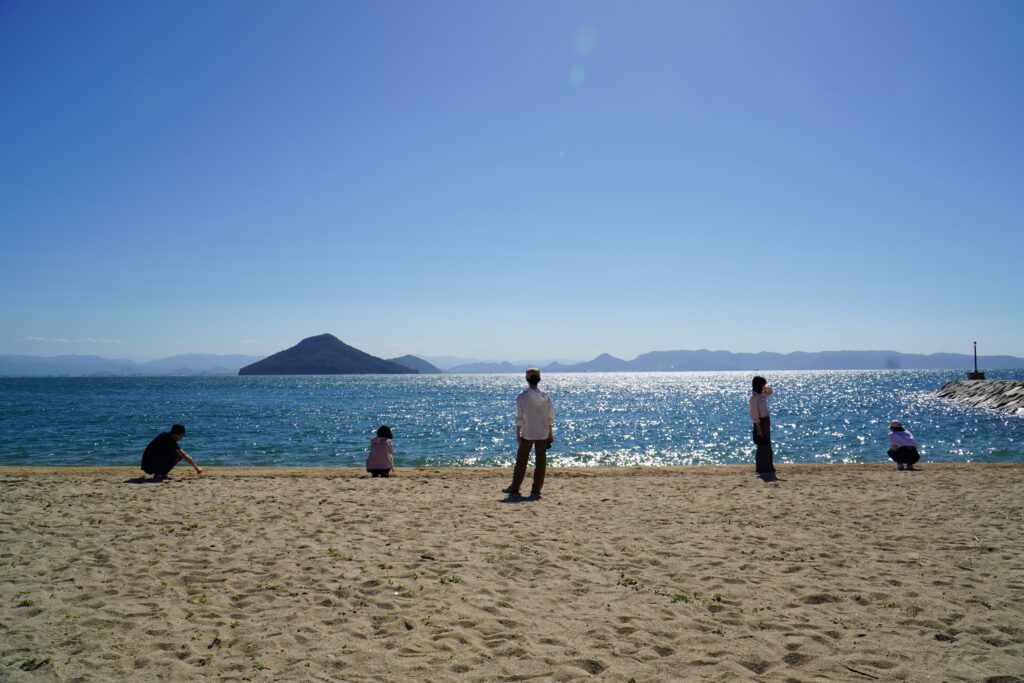
Setouchi Study Camp 2025
“Exploring Society and the World Through Diverse Artistic Expressions”
Program Dates: October 9–12, 2025
Locations: Takamatsu City, Megijima, Teshima, Oshima (Kagawa Prefecture)
Number of Participants: 5
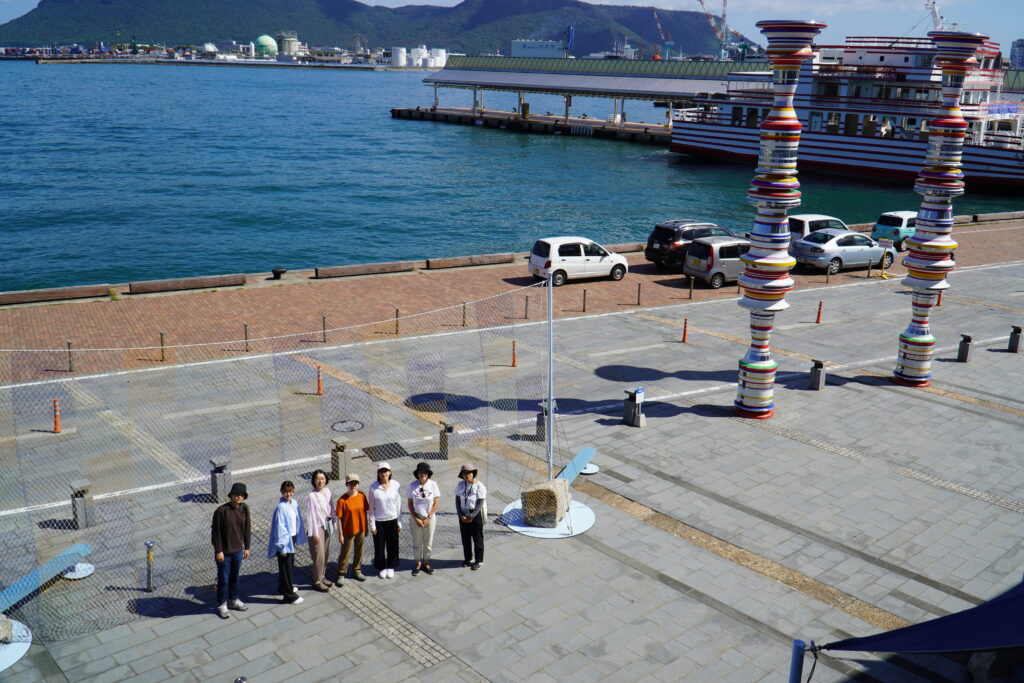
From October 9 to 12, 2025, the Wesley Zaidan held the Setouchi Study Camp 2025, a four-day learning program designed to explore society and the world through diverse artistic expressions within the Setouchi Triennale. Five participants—university students and young professionals—joined the program and visited several islands across the Seto Inland Sea.
This study camp was planned in connection with the our support for a collaborative photo exhibition organized by the Setouchi Triennale Executive Committee and the UNHCR Representation in Japan. Through this experience, the program aimed to learn about issues such as refugees, environmental challenges, Hansen’s disease, human rights, and local communities.
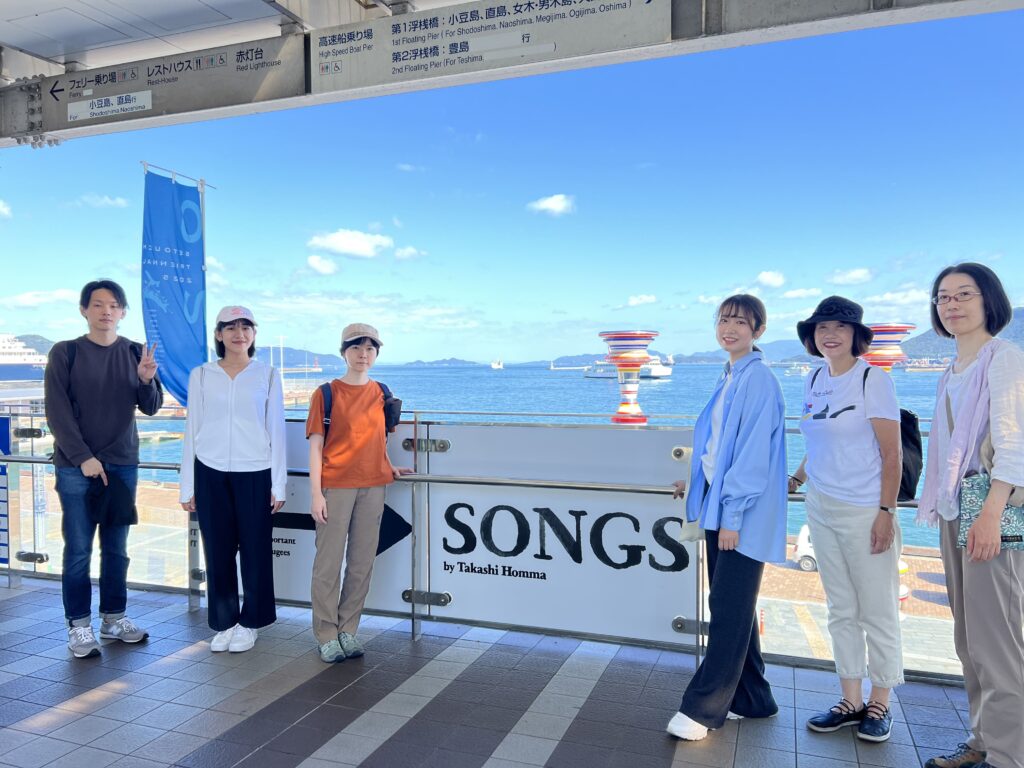
About the Setouchi Triennale
The Setouchi Triennale is an international contemporary art festival held once every three years. This year, the Wesley Zaidan supported part of a photo exhibition jointly organized by the Setouchi Triennale and the UNHCR Representation in Japan.
(Details available here.) only in Japanese.
The Triennale takes place across 12 islands in the Seto Inland Sea, as well as at Takamatsu Port and Uno Port. Since its first edition in 2010, it has attracted nearly one million visitors from Japan and abroad. Over approximately 100 days divided into spring, summer, and autumn seasons, visitors can experience contemporary artworks in harmony with the natural landscapes and cultural heritage of the islands.
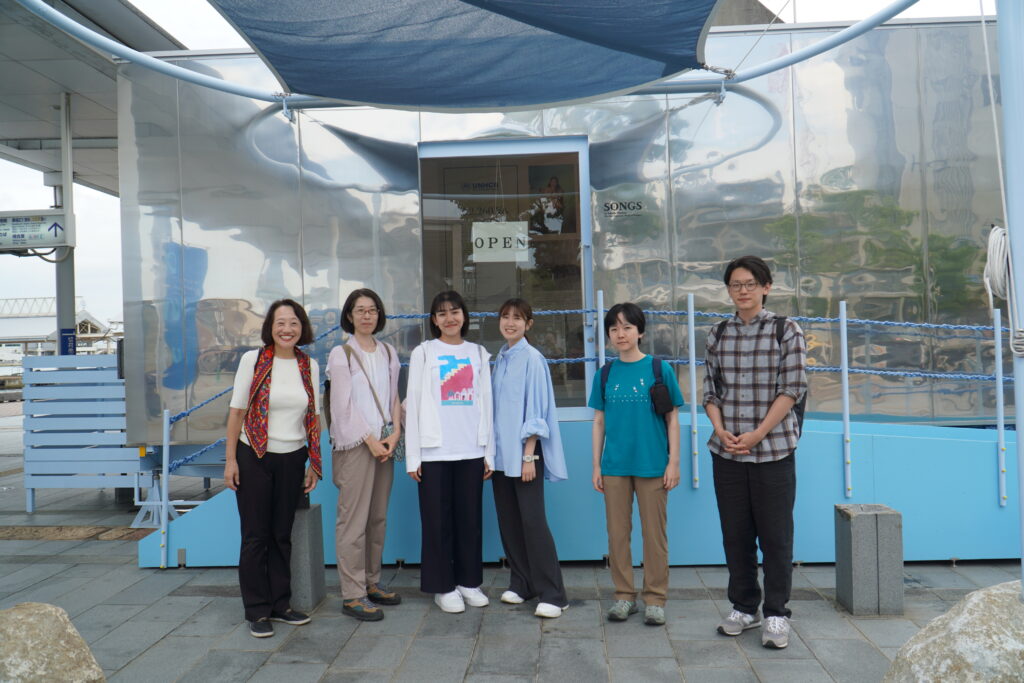
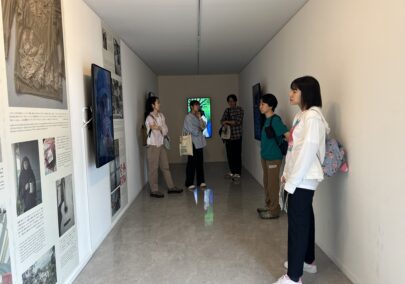
The photo exhibition “SONGS—Stories Told Through Belongings” by photographer Takashi Homma, supported in part by the Wesley Zaidan, was displayed in a special trailer-house gallery at Takamatsu Port. The exhibition highlights the stories of individual refugees through the “objects” they cherished while fleeing their homes. Participants viewed this exhibition on the final day of the camp.
Day 1: Megijima
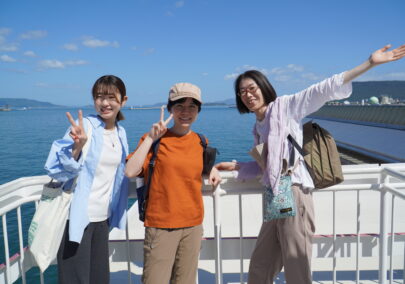
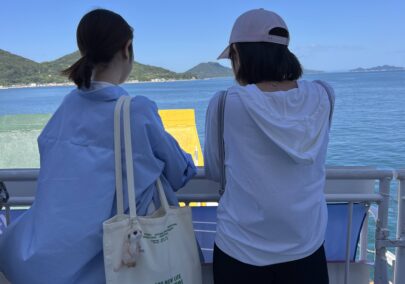
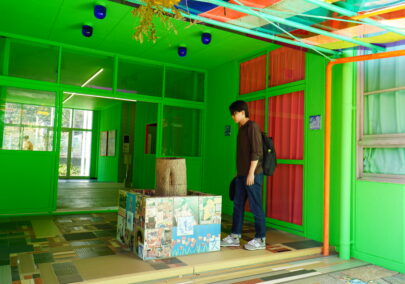
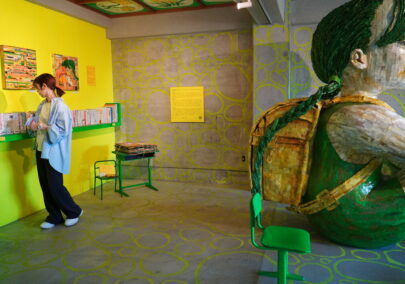
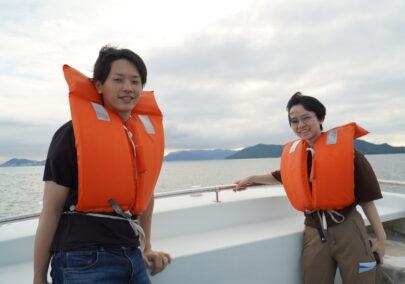
The group began their journey on Megijima. Even the boat ride—under dazzling sunshine and sea breeze—signaled the beginning of an extraordinary experience. On the island, participants visited installations in a former elementary school and encountered a variety of works by artists from Japan and abroad.
Colorful, interactive, and immersive artworks allowed the group to enjoy the unique expressions of contemporary art and get a sense of the festival’s atmosphere.
Day 2: Teshima
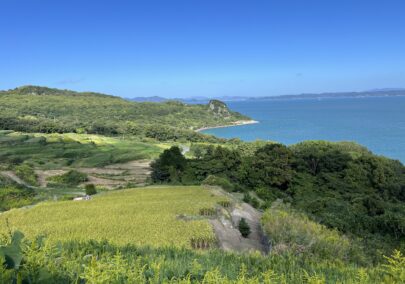
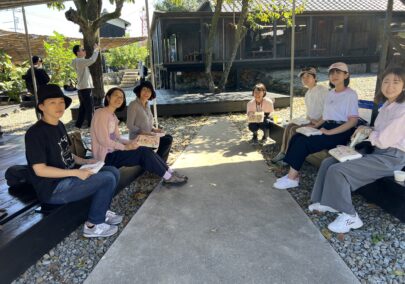
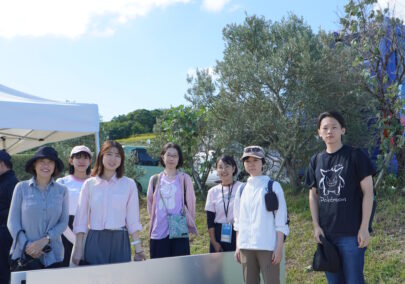
On the second day, the group visited Teshima—an island of abundant greenery, beautiful coastlines, and clear skies. Despite its serene landscape, Teshima also carries a painful history of illegal industrial waste dumping.
The golden terraced rice fields, blue sky, and glittering sea formed a stunning contrast, making it difficult to imagine the environmental damage once inflicted on the island.
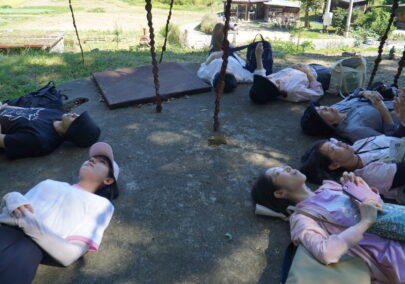
At the Teshima Art Museum, participants spent time in quiet reflection, listening to the subtle sounds of water droplets within the space. Lunch was a bento from Shima Kitchen, offering a taste of the island’s rich local ingredients. In the afternoon, participants explored artworks around the Kou district and Ieura Port, including installations inspired by the sea.
Day 3: Oshima
The third day focused on visiting Oshima, the core learning site of this program. Oshima is home to Seishōen, a Hansen’s disease sanatorium, and the entire island has historically been part of Japan’s long-standing segregation policy. Until the repeal of the Leprosy Prevention Law in 1996, for nearly 90 years, residents were not allowed to leave the island freely, and many lost the opportunity to return to their homes. The continuation of segregation even after the disease was proven non-contagious raises serious questions about human rights.
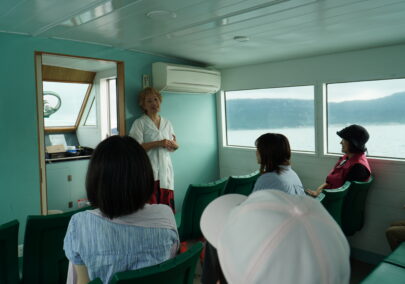
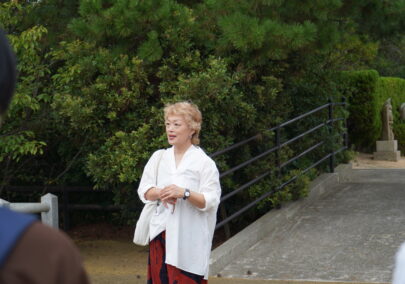
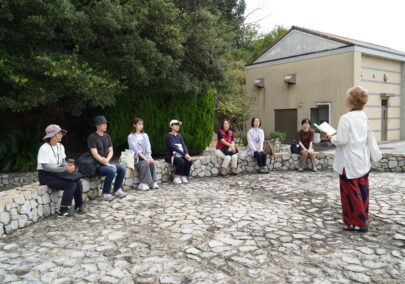
To deepen understanding of Seishōen, the group welcomed Ms. Tomoe Sawa—a Christian and singer—who has been involved with the island since childhood. She has long studied the sanatorium’s songs and built long-standing relationships with residents. Ms. Sawa guided the group around the island, sharing the stories of individuals she has known through years of connection.
In the now-quiet Seishōen, Ms. Sawa spoke about former and current residents not as “patients” or “sanatorium residents,” but as individuals—each with a name and a life story. Through her words, participants learned how people with different backgrounds and values lived together in a setting where living in community was not a choice but a necessity. Their efforts to respect one another and build relationships, even amid differences, conveyed a profound sense of human strength.
As the group toured the island, Ms. Sawa read aloud poems by poet Kazuko To. The depth and weight of the words resonated in the quiet landscape. After lunch, participants observed a singing practice with one of the residents with whom Ms. Sawa has a close relationship, offering a glimpse into daily life on the island.
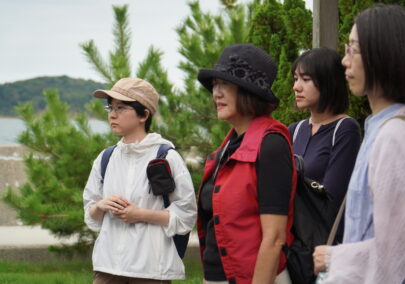
The group then viewed artworks displayed as part of the Triennale. Some pieces shed light on historical human rights violations—such as the restriction that residents could marry but were not permitted to have children, the requirement to use pseudonyms, and limitations even after death. These installations prompted reflection on how such histories should be remembered and taught to future generations.
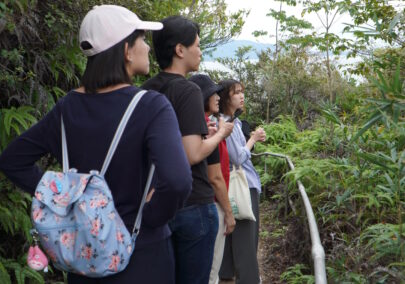
On the ferry back to Takamatsu port, participants quietly reflected on the day’s learning and experiences.
Day 4: Takamatsu Port
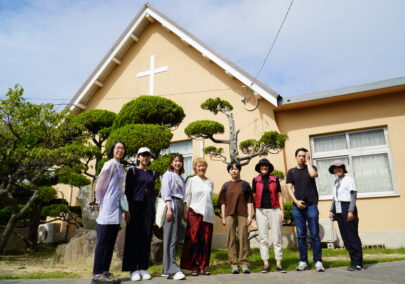
On the final day, the group attended Sunday worship at the Japan Christian Church Yashima Church. The hymn “Koko wa Kami no Mikuni Naredo,” which they had sung the previous day on Oshima, happened to be part of the service, creating a meaningful moment of connection.
In the afternoon, participants viewed the Takashi Homma photo exhibition at Takamatsu Port. The exhibition highlights the “individual stories” of refugees—often spoken of as a single group—prompting the group once again to consider each person’s name, life, and experience.
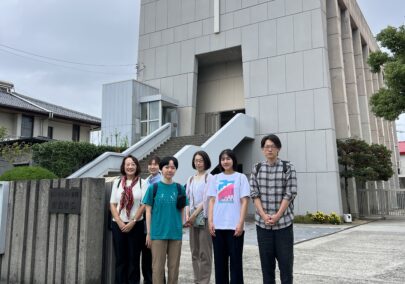
Over the four days, as participants visited different islands and encountered various artworks, they were able to step away from their daily routines and gain valuable insights into social issues, human rights, history, and the future of local communities.
Wesley Zaidan will continue to provide diverse learning opportunities that address social issues and offer programs that enable younger generations to gain a deeper understanding of the world.
Participants Reflection
About six months into my professional life—constantly expected to be “strong” and to keep running without pause—I was given the opportunity to step away from my hectic daily routine and face myself through encounters with art. Even after returning to Tokyo, I continued this process of introspection. What gradually came into view was my own undeniable “weakness.”
Through this program, I came to realize what I need to do next: to allow myself to engage more deeply with the “weakness” of others, and with my own as well. When we interact with others, their vulnerabilities often reveal themselves. I want to be someone who can hold that gently—while also offering my own smallness and fragility in return.
To friends who are struggling with their own weakness, I want to be able to say:
“It’s okay. I’m weak too. Let’s keep living together.”
One of the most memorable moments for me was learning about the six keywords presented at the Oshima Seishōen Social Exchange Hall—words that had supported the lives of those who lived there:
“Enter, Gather, Pray, Work, Devote Oneself, Sleep.”
These are not simply daily actions; they represent essential human activities—ways of living that sustain a sense of dignity and hint at what “richness of life” truly means.
In contrast, many modern lifestyles—including my own—consist of commuting between home and work, and spending days off mindlessly scrolling on a smartphone. Perhaps such patterns cannot lead to real “richness.” This realization struck me deeply.
At the same time, I recognized that the richness we see on Oshima today cannot be separated from the deep pain and hardships that preceded it. We must never gloss over that reality with simplistic conclusions such as, “It was sad, but things are fine now because the present is rich.”
Instead, we must ask ourselves: What can we do to ensure such injustices are never repeated?
My visit to Oshima made me understand the importance of not only learning through books but also going to the actual site—seeing with my own eyes, hearing with my own ears, feeling with my own hands, and gathering information from every angle. That experience made all the difference.